
Speaking
Dr. Twenge’s talks – spiced with plenty of pop culture and humor – vividly show how technology and other forces have shaped the generations. That includes trends in work attitudes, behaviors, mental health, academic performance, and many other factors. Conclusions are based on U.S. and international datasets including 43 million people.
Talks are customized for each audience and can be either virtual or in person. Below is a brief overview of topics often covered for different audiences.
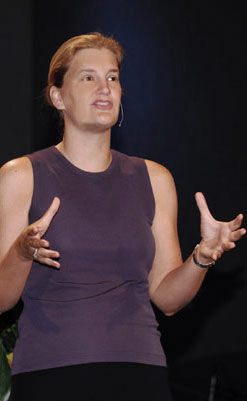
Generational differences in the workplace.How does Gen Z really differ from Millennials, GenX, and Boomers? This talk features the most relevant generational trends as well as strategies managers can put in place immediately to more effectively work across generations. Previous audiences include KPMG, Oracle, the U.S. Air Force, Crafton Tull, the Future Proof Festival, H.G. Fenton, Northern Trust, Universal Health Services, the Association of Art Museum Directors, Potlatch Deltic, Sequoia Equities, Americas Styrenics, CORD (the Council of Residency Directors for Emergency Medicine), the Veterinary Management Group, the U.S. Army, ADRP Blood Centers, Teach for America, Thompson & Coburn, the U.S. Marine Corps, Children’s Hospital of Orange County, the Mayo Clinic Hospital at Phoenix, Microsoft, Halmar International Construction, King’s Seafood, Jefferies Financial Group, the Camp Owners and Directors Association, Intellia Therapeutics, Optima Healthcare, the Finishing Industries Forum, the Workforce Investment Board of Tulare County.
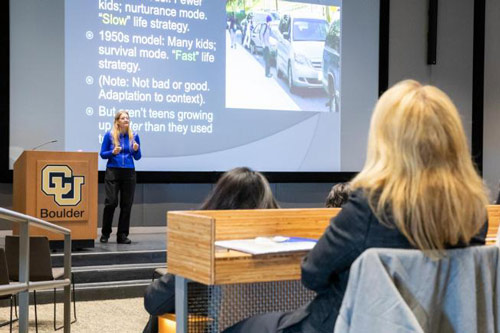
Teaching and mentoring today’s students. Are today’s students really different – or am I just getting old? This talk harnesses the data on generational differences to better understand how to teach and mentor this generation, also drawing on Dr. Twenge’s 25 years of experience as a college faculty member. This talk is appropriate for high school and middle school teachers, K-12 administrators, college faculty and staff (including student life), and medical school faculty and physicians who mentor residents. Previous audiences include Duke University, Northwestern University Feinberg School of Medicine, University of Michigan, Oklahoma State University, Indiana University School of Medicine, Rollins College, North American Interfraternity Conference, Baylor University, Scottsdale Community College, Santa Maria Catholic High School, Cleveland Lutheran High School Association, Wheaton College, Eagle Hill School, Independent Schools Association of the Southwest, University of Southern California, Miami University Regional Campuses, the University of Massachusetts at Dartmouth, Wabash College, Leeds School of Business at the University of Colorado, the U.S. Military Academy at West Point, the UCSD School of Medicine, Hillel International, the University of Rhode Island, the Family Medicine Department at the University of Calgary, Virginia Commonwealth University School of Business, Sweet Briar College, the New England Commission of Higher Education (NECHE), the University of Minnesota, the University of Georgia, Boston College, UCLA, Illinois Wesleyan University, Mt. San Jacinto College, The Rhode Island School of Design, College of the Sequoias, Florida International University, Martin Luther College. Delete from the list: Miami University Regional Campuses, Hillel International, the University of Minnesota, the University of Georgia, the Family Medicine Department at the University of Calgary, Sweet Briar College, Boston College, Illinois Wesleyan University.
How school phone bans can help students. Many school districts are realizing that their current phone policies don’t work, so they are considering implementing a “no phones during the school day bell-to-bell” rule for students. But how do you get parents on board? This talk presents the research on declines in academic performance, ability to concentrate, mental health, and independence among youth and details how phone bans can help students, as well as addressing common parent concerns. It also discusses challenges with school-issued tablets and laptops. Previous clients include Mater Dei Catholic High School, Dedham Country Day School, St. Francis Xavier Catholic School System, the Academy of the Holy Names, and Pacific Ridge School.
10 Rules for raising kids in a high-tech world: Trying to manage your kids’ technology use is an enormous challenge. Building on Dr. Twenge’s research on mental health and technology as well as her experience as the mother of three teens, this talk lays out 10 concrete rules for introducing smartphones and social media only when kids are ready and protecting them once they’re online. It also includes ways that kids and teens can build real-world independence. Previous audiences have included The Akiba Yavneh Academy, the University School of Milwaukee, Jewish Family and Children’s Services, Concord-Carlisle Regional School District, the Children’s School of La Jolla, parents from the Episcopal School of Dallas, Saint Andrew’s School of Boca Raton, Shadle Park High School (Spokane, WA), Cathedral Catholic High School, Germantown Academy, Wesleyan School, Ephraim Curtis Middle School and Lincoln-Sudbury Regional High School, St. John’s School, and the John Cooper School.
Generations: The Real Differences between Gen Z, Millennials, Gen X, Boomers and Silents—and What They Mean for the Future: What causes generational differences, and how do the generations differ apart from the popular myths? This talk covers the three major trends behind generational differences, the influences and outcomes of the five adult generations, and harnesses extensive survey data to project future trends. Based on Dr. Twenge’s 2025 book, Generations, the talk can be customized to include any of the topics covered in the book. Previous audiences include MidOcean Partners, Cresset Capital, Coudert Institute, the American Enterprise Institute (AEI), the Southern California Association of Governments, Kohlberg & Company, The Glenmede Trust Company, the Colson Center, Western Kentucky University.
Marketing to Gen Z and Gen Alpha: Speculations about generational differences have created lots of rumors – but what has really changed? And what does that mean for the future of consumer behavior, including real estate? This talk cuts through the myths to reveal the best trend data on young people, including changes in the speed of development, mental health and happiness, technology use, optimism and pessimism, attitudes around safety, views on advertising, and interest in the environment. Previous audiences include Verizon, John Burns Research and Consulting, Builder 100, University of Florida Bergstrom Real Estate Center, WP Global Partners, the Virginia Credit Union, Platte River Equity, Sit Investment Associates and Marquette Associates.
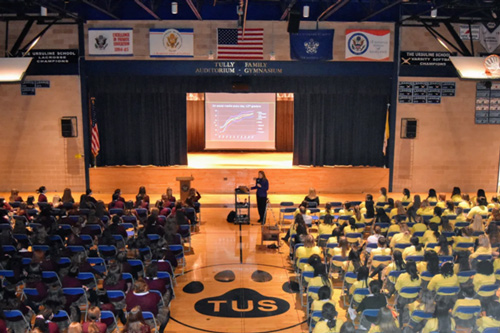
Managing technology use, for teens: Teens and tweens know their lives are different from previous generations’ – but they don’t always understand why, and they often struggle to manage their technology use. This talk helps young people understand the impact of social media and screen time on their mental health and empowers them to take steps to find a better balance with technology. The talk is appropriate for students in grades 6-12 and can be modified for students as young as 3rd grade. Previous audiences have included Vail Mountain School, Saint Andrew’s School of Boca Raton, Wesleyan School, St. John’s School, the John Cooper School, La Jolla Country Day School, the Webb Schools, Palm Beach Day Academy, the Ursuline School, Villa Maria Academy, the Episcopal School of Knoxville, the Kincaid School, the Francis Xavier School, Frances Parker School, St. Margaret’s Episcopal School, St. Juliana Falconieri School, Eagle Hill School, the Academy of the Holy Names, the University School of Milwaukee, Pacific Ridge School.
iGen: What research tells us about your generation: College students are curious to find out how their generation is different and enjoy learning about how psychology research is conducted. They also want to hear about how they can better manage their technology use. This talk can also be opened up to community members, staff, and faculty. Previous audiences have included Bowdoin College, Michigan Technological University, Wabash College, SUNY Broome Community College, the University of Tennessee at Martin, Trent University, Brigham Young University and Delta College.
Guiding the smartphone generation. Camps, youth organizations, the military, and educators want to understand how Gen Z is different. Even more, they want to guide this generation toward more independence and better mental health. Previous audiences include Fort Moore (Army), the Lilly Foundation, the Institute for Religious Education, Independent Schools Association of the Southwest, Everfi, the Western Association of Independent Camps, Safer California, the Changing the Odds conference, Pearson Education, the JCC of Greater Pittsburgh, the Catholic Campus Ministry Association, the Jewish Federation of Metropolitan Detroit, the Independent Schools Association of the Southwest, the Foundation for Jewish Camp, the Young Marines, Growing Leaders and the National Guard Youth Challenge Program.
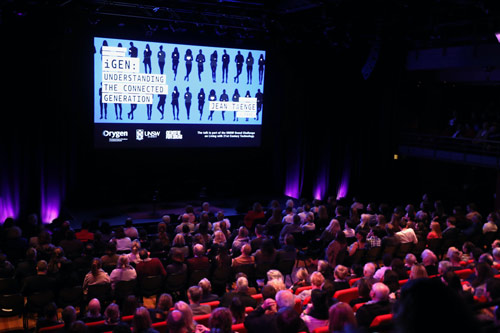
 Understanding and improving child and adolescent mental health. This talk features the latest research on mental health trends for children, teens, and young adults as well as what can be done to counter the rise in depression, anxiety, self-harm, and suicide in this group. This talk can be used to fulfill professional development hours. Previous audiences include Psychotherapy Networker Symposium, the Student Mental Wellness Conference, the California Psychological Association, CICAMH (Critical Issues in Child and Adolescent Mental Health), the Calciano Symposium, the UT-Austin Counseling and Mental Health Center, Hope4Utah, Orygen — the National Centre for Excellence in Mental Health (Australia), Harvard University, Intermountain Health, Primary Children’s Hospital Utah, Mott Children’s Health Center, Vista Hill, the Warren Coalition (Virginia), Early Childhood Mental Health Conference, Dartmouth College, University of Toronto Leong Centre for Healthy Children, Indiana University.
To hire Dr. Twenge for your next event, please contact her directly at jeantwenge@gmail.com.